2026 Social Commerce Predictions: What's Next for Creators, Brands, and Shoppers

Social commerce is no longer a subcategory of e-commerce. In 2026, it is the primary way a growing share of consumers discover and purchase products, particularly in categories where trust, demonstration, and aspiration drive buying decisions. The global social commerce market reached $1.2 trillion in 2025, and credible projections place it at $2.9 trillion by 2030. The velocity of this shift is creating inflection points across technology, consumer behavior, and business models that will define the next era of retail.
What follows are ten predictions for social commerce in 2026 and beyond. These are not speculative fantasies about distant futures. They are extrapolations from trends that are already measurable, grounded in data where possible and in structural analysis where the data has not yet caught up to the reality on the ground. Some will prove directionally correct even if the timing is off. A few may be wrong entirely. The goal is not precision but useful foresight.
📊Global social commerce revenue reached $1.2 trillion in 2025, growing at 31% year-over-year. The U.S. market alone accounted for $107 billion, up from $68 billion in 2023. By 2030, social commerce is projected to represent 17% of all e-commerce transactions globally. -- Accenture / eMarketer
Prediction 1: AI Will Become the Default Shopping Assistant
The integration of AI into the shopping experience will move from novelty to expectation. By the end of 2026, consumers will routinely interact with AI-powered shopping assistants embedded in social commerce platforms that understand their preferences, recommend products based on visual content they are watching, and handle comparison shopping across brands and creators in real time.
This is not a chatbot answering FAQs. The emerging AI shopping assistant watches the same video content the consumer watches, understands the products being featured, cross-references the consumer's purchase history and stated preferences, and proactively surfaces purchase opportunities with pricing context. "You're watching a video featuring a ceramics set similar to the one you browsed last week -- it's available from this creator's shop at 15% less than the version you looked at" is the kind of contextual, real-time assistance that will become standard.
Platforms like Kiwana are already building this integration layer, using computer vision to identify products in video content and connecting them to shopping infrastructure. The next step -- personalizing these detections based on individual consumer intent signals -- is technically achievable with current AI capabilities and will likely be broadly deployed within 12-18 months.

Prediction 2: The Creator Middle Class Will Explode
The creator economy's biggest structural problem has been its extreme inequality. In 2024, the top 1% of creators captured approximately 80% of total creator revenue. The "missing middle" -- creators with 10,000 to 100,000 engaged followers who create quality content but cannot attract brand deals -- represented the largest population of creators but the smallest share of revenue.
Social commerce is changing this equation by decoupling creator income from brand sponsorships and advertising revenue. When creators earn commission on products sold through their content, their income is proportional to their commercial influence -- their ability to drive purchases -- rather than their reach metrics. A creator with 25,000 highly engaged followers in a high-intent niche (home renovation, specialty cooking, professional photography) can generate more commerce revenue than a creator with 500,000 followers in a low-intent category.
AI-powered product matching and visual attribution are accelerating this trend by making it economically viable for brands to partner with thousands of mid-tier creators. The overhead of managing these partnerships -- which was the primary barrier -- is being eliminated by automation. Prediction: by the end of 2027, the share of total creator revenue captured by creators in the 10K-100K follower range will increase from approximately 12% to 30%, representing the emergence of a genuine creator middle class.
Prediction 3: Live Shopping Will Find Its Western Format
Live shopping generates over $500 billion annually in China but has struggled to gain traction in Western markets. Every major platform has launched and subsequently scaled back live shopping features over the past three years. The standard explanation -- "Western consumers don't like live shopping" -- misdiagnoses the problem.
The real issue is format, not concept. Chinese live shopping succeeds because it evolved from a unique cultural context: QVC-style television shopping reimagined for mobile with parasocial interaction dynamics specific to Chinese social media. Western platforms have attempted to copy this format directly, and it does not translate because the underlying social dynamics and shopping behaviors are different.
The Western format that will work is emerging now: shoppable content that happens to be live, rather than live events that happen to be shoppable. Think of a creator doing their regular cooking stream, with products identifiable and purchasable in real time through AI detection, rather than a creator hosting a dedicated "shopping show." The commerce layer is ambient rather than the primary purpose of the content. This format aligns with Western social media consumption patterns, where entertainment is the draw and commerce is the byproduct.
💡The key difference between successful and unsuccessful live shopping in Western markets is intent framing. When the primary intent is shopping, Western consumers disengage. When the primary intent is entertainment or education and the shopping is contextual, conversion rates match or exceed East Asian benchmarks.
Prediction 4: Platform Consolidation Will Accelerate
The social commerce landscape in 2025 is fragmented across dozens of platforms, each with different tools, audiences, and commerce capabilities. This fragmentation is unsustainable for both creators and brands. Managing product listings, content, and analytics across 8-10 platforms consumes resources that could be spent on content creation and customer experience.
Consolidation will happen on two levels. First, platform acquisitions: major social platforms will acquire specialized commerce tools to build integrated shopping experiences. Second, and more significantly, infrastructure consolidation: middleware platforms that allow creators to manage commerce across all social platforms from a single interface will capture the market. The winner will not be the platform that kills all others, but the infrastructure layer that makes multi-platform commerce manageable.
This is precisely the opportunity that platforms like Kiwana are pursuing -- providing the unified commerce and content creation infrastructure that sits between creators and the fragmented landscape of social platforms. The value proposition is not replacing Instagram or TikTok, but making it possible to operate a creator-driven commerce business across all of them without the operational overhead multiplying with each additional platform.
Prediction 5: Visual Search Will Surpass Text Search for Product Discovery
The shift from text-based to visual product discovery has been gradual but is approaching a tipping point. Google Lens processes over 12 billion visual searches monthly. Pinterest's visual search drives 600 million monthly product discoveries. TikTok users increasingly search the platform for product recommendations instead of Google.
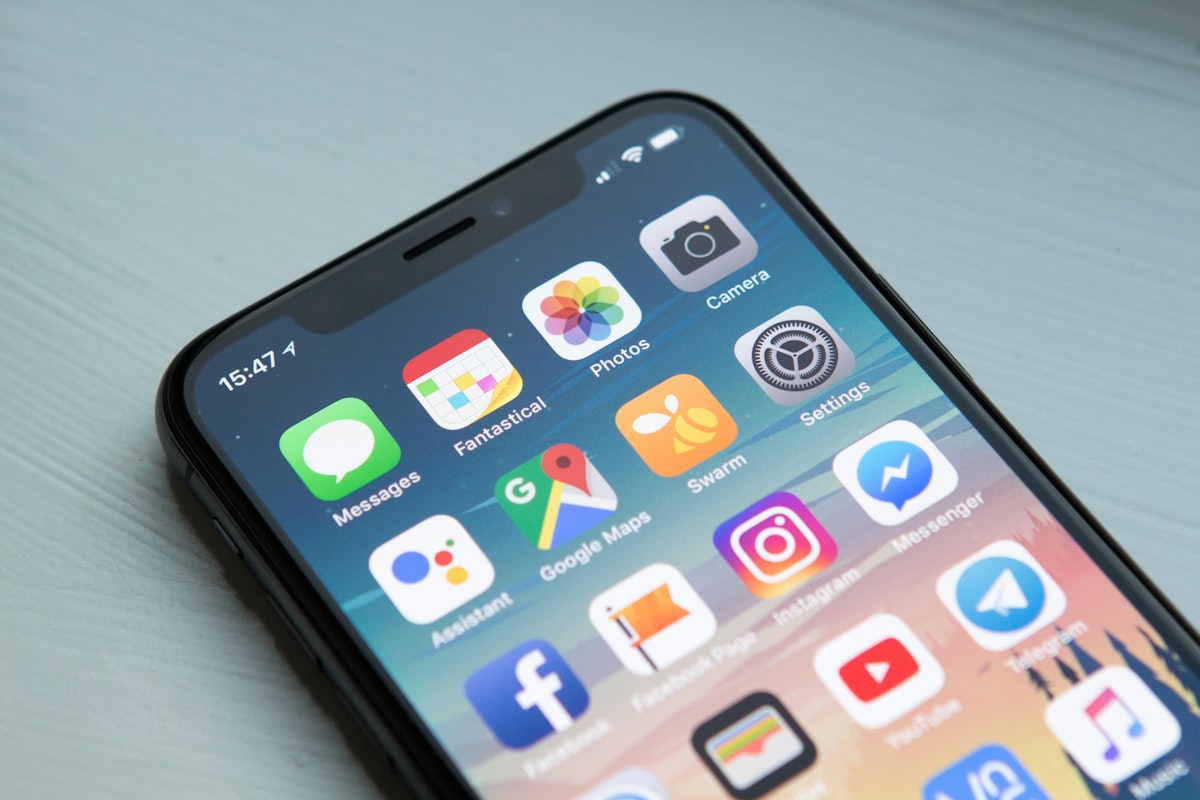
By the end of 2026, visual search -- finding products by pointing a camera or tapping on an item in a video -- will surpass text search as the primary method of product discovery for consumers under 35. The implications for social commerce are enormous. When discovery is visual, content becomes the search engine. A creator's video is not just entertainment or marketing -- it is a searchable product catalog where every item can be identified, priced, and purchased.
📊Consumers under 25 are 3.2x more likely to discover new products through social video content than through traditional search engines. Among this demographic, 67% report having purchased a product they first saw in a short-form video. -- YPulse Gen Z Shopping Behavior Study 2026
Prediction 6: Emerging Markets Will Lead Innovation
The most innovative social commerce models in the next three years will originate in emerging markets, not Silicon Valley. Southeast Asia, Latin America, and Africa are developing social commerce patterns that leapfrog Western models entirely, driven by mobile-first populations, limited traditional retail infrastructure, and deeply social purchasing cultures.
Indonesia's social commerce market is growing at 48% annually, driven by platforms like TikTok Shop Indonesia (which survived the brief ban) and local players like Tokopedia. Brazil's WhatsApp Commerce ecosystem processes billions in transactions through conversational commerce patterns that have no Western equivalent. Nigeria's Instagram-based commerce culture has created a template for social selling in markets where traditional e-commerce infrastructure is nascent.
The innovation flow will reverse: instead of Western platforms exporting features to emerging markets, the most successful social commerce features of the next five years will be imported from or inspired by emerging market innovations. Conversational commerce, community-based group buying, creator-led micro-retail, and trust-network-based delivery systems are all patterns that emerged in developing markets and are beginning to influence global platform strategies.
Prediction 7: Creator-Led Brands Will Outperform Traditional DTC
The direct-to-consumer (DTC) brand model that dominated the 2015-2020 era -- build a brand, spend heavily on Facebook and Instagram ads, acquire customers at scale -- is increasingly uneconomic. Customer acquisition costs have risen 60% since 2020, ad targeting has become less precise due to privacy changes, and consumer trust in advertising continues to decline.
Creator-led brands invert the DTC model. Instead of building a brand and then finding an audience, creators start with an audience and then build a brand. The customer acquisition cost is effectively zero because the audience already exists and trusts the creator. The product development is informed by direct audience feedback. The distribution is organic through the creator's content. And the brand narrative is inherently authentic because it is tied to a real person, not a marketing campaign.
By 2028, creator-led brands will represent a meaningful share of consumer packaged goods revenue in categories like beauty, wellness, food, and apparel. The infrastructure for this shift -- AI-assisted product sourcing, turnkey manufacturing partnerships, integrated commerce platforms -- is maturing rapidly. Tools like Kiwana's social commerce infrastructure are specifically designed to lower the operational barriers that have historically prevented creators from launching their own product lines.
Prediction 8: AI Video Editing Will Become Indistinguishable From Professional Post-Production
The quality gap between AI-edited creator content and professionally post-produced brand content is closing rapidly. AI video editing tools -- like Kiwana's Slyce platform -- are automating color grading, scene transitions, caption generation, b-roll insertion, and format reframing at a quality level that was indistinguishable from professional editing in blind tests conducted in early 2026.
The implications for social commerce are twofold. First, the production quality floor for creator content rises dramatically, which increases consumer trust and conversion rates. Second, the time creators spend on editing drops from hours to minutes, freeing them to create more content and focus on the creative and relational aspects that cannot be automated. A creator who previously published three videos per week because editing was the bottleneck can now publish daily, increasing their reach, commerce opportunity, and audience engagement simultaneously.
📊Creators using AI video editing tools produce 3.8x more publishable content per week with no decline in audience engagement metrics. The average editing time per video has decreased from 4.2 hours to 38 minutes for creators using AI-native editing platforms. -- Creator Economy Research Lab, Stanford
Prediction 9: Social Proof Will Become Programmable
Social proof -- the psychological mechanism where people look to others' behavior to guide their own decisions -- has always been the engine of social commerce. Reviews, ratings, "X people bought this," and influencer endorsements are all forms of social proof. In 2026, social proof becomes programmable: dynamically generated, contextually relevant, and personalized to the individual consumer.
Instead of showing a generic "4.7 stars from 2,340 reviews," a social commerce platform can show "23 people in your network bought this product, and 19 of them rated it 5 stars." Instead of a celebrity endorsement, the platform shows a micro-creator the consumer already follows and trusts using the product in a recent video. The social proof is selected from the consumer's own social graph rather than from an anonymous aggregate.
This personalization of social proof raises both opportunity and ethical considerations. Programmable social proof can genuinely help consumers make better decisions by surfacing the most relevant endorsements and reviews. It can also be manipulated to create false consensus or exploit social pressure. The platforms and tools that establish clear ethical guidelines around social proof personalization -- transparency about how endorsements are selected, clear labeling of paid partnerships, protection against manufactured consensus -- will earn consumer trust that translates into long-term competitive advantage.
Prediction 10: The Commerce Layer Becomes Invisible
The ultimate trajectory of social commerce is toward invisibility. The most successful commerce experiences will be those where the consumer does not feel like they are "shopping" at all. They are watching content, exploring interests, engaging with creators they admire -- and the ability to purchase items that appear in that content is seamlessly available without disrupting the experience.
This is the vision driving platforms like Kiwana's Wootmarts, where shoppable video feeds present products through creator content rather than product pages. The product detail is available on tap, the checkout is embedded, and the return to content is instantaneous. The experience feels like watching TikTok with the option to buy what you see, rather than visiting a store with embedded videos.
Invisible commerce requires the convergence of several technologies: visual product detection (so products are shoppable without manual tagging), one-tap checkout (so purchase friction is minimal), AI-powered sizing and fit prediction (so returns are reduced), and contextual AI assistants (so questions can be answered without leaving the content). Each of these technologies exists today. Their integration into a seamless, invisible commerce layer is the defining infrastructure challenge of social commerce in 2026.

The Convergence Thesis
These ten predictions are not independent trends. They are interconnected forces that reinforce each other and converge toward a single thesis: the distinction between content, commerce, and community is dissolving. In the near future, these will not be separate experiences served by separate platforms. They will be a single, integrated experience where discovering products, evaluating them through trusted voices, purchasing them, and sharing your own experience is one continuous flow.
AI is the connective tissue that makes this convergence possible. Computer vision connects content to commerce by identifying products in video. Natural language processing connects community to content by understanding conversations and sentiment. Recommendation engines connect commerce to community by surfacing products endorsed by people in your network. Generative AI connects creators to all three by reducing the friction of content production, product sourcing, and audience engagement.
We are witnessing the end of commerce as a distinct activity. Shopping is becoming a byproduct of living, creating, and connecting. The companies that understand this shift -- that build for seamless integration rather than transactional efficiency -- will define the next generation of retail.
— Benedict Evans, Independent Technology Analyst
What This Means for Builders
For companies building in the social commerce space, these predictions suggest several strategic priorities. First, invest heavily in AI integration at every layer of the stack, from content creation through product detection through attribution. The AI capability gap between leaders and laggards will widen dramatically over the next two years. Second, build for the creator middle class, not just the top 1%. The largest market opportunity is in enabling tens of millions of mid-tier creators to monetize their influence efficiently. Third, design for invisible commerce -- the platforms that feel least like shopping will capture the most shopping behavior.
For creators, the predictions point toward a future where the operational complexity of running a creator-driven commerce business continues to decrease while the revenue opportunity continues to increase. The creators who invest now in understanding commerce (not just content), in building genuine trust with their audiences (not just reach), and in adopting AI-powered tools that amplify their productivity will be positioned to capture a disproportionate share of the coming opportunity.
For brands, the message is clear: the brands that will thrive in the social commerce era are those that stop thinking of social as a channel and start thinking of it as the primary commerce environment. This means investing in creator relationships as core revenue infrastructure, not marketing line items. It means building products that are designed to be discovered through content, not just through search. And it means embracing the loss of control that comes with creator-driven distribution, because the authenticity and trust it generates far outweighs the brand safety risks.
The social commerce revolution is not a future event to prepare for. It is a present reality that is reshaping consumer behavior, creator economics, and retail infrastructure in real time. The predictions outlined here are less about what will happen and more about how fast. The directionality is clear. The only variable is pace.
Sources
- Social Commerce Market Size and Growth Projections — Accenture
- US Social Commerce Forecast 2024-2028 — eMarketer / Insider Intelligence
- Creator Economy Revenue Distribution Analysis — Goldman Sachs
- Gen Z Shopping Behavior: Social Discovery and Purchase Patterns — YPulse
- Live Commerce: Global Trends and Western Market Adaptation — McKinsey & Company
- Southeast Asia Social Commerce Landscape — Bain & Company
- AI in Retail: From Automation to Intelligence — Gartner
- The Future of Visual Search in Commerce — Google